
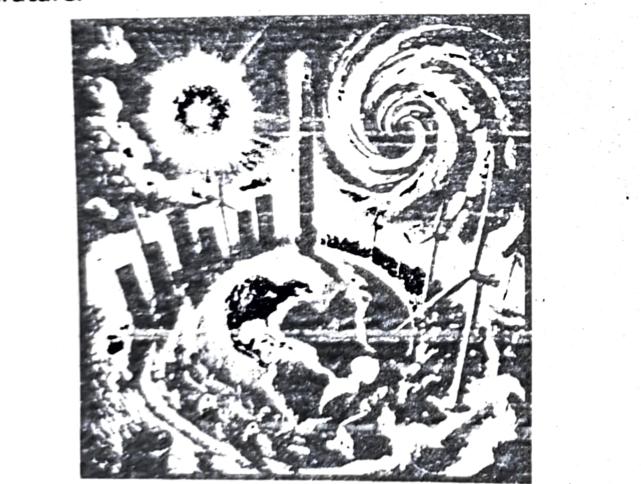
This AI-generated image illustrates global warming caused by the greenhouse effect and its impact on climate change. It shows how rising temperatures due to the greenhouse effect led to more frequent and intense heat waves and hurricanes. It shows how rising temperatures due to the greenhouse effect led to more frequent and intense heat waves and hurricanes. Answer the following questions, considering the concepts mentioned above:
- How do increased temperatures lead to more frequent heat waves in cities?
- How might the intensity of future hurricanes change if global temperatures continue to rise?
- Explain what the glass roof of a greenhouse and carbon dioxide in Earth’s atmosphere have in common in terms of heat and temperature.
Solution:
a. How do increased temperatures lead to more frequent heat waves in cities?
Ans: Increased temperatures lead to more frequent heat waves in cities because urban areas tend to have a “heat island” effect, where buildings and pavement absorb and radiate heat, trapping it in the city environment. As global temperatures rise overall, this heat island effect is amplified, leading to even hotter temperatures during heat waves, making them more frequent and severe.
b. How might the intensity of future hurricanes change if global temperatures continue to rise?
Ans: If global temperatures continue to rise, hurricanes are likely to become more intense due to warmer ocean temperatures providing more energy for storm development. Warmer waters lead to increased evaporation, fueling stronger winds and heavier rainfall associated with hurricanes.
c. Explain what the glass roof of a greenhouse and carbon dioxide in Earth’s atmosphere have in common in terms of heat and temperature.
Ans: The glass roof of a greenhouse and carbon dioxide in the Earth’s atmosphere are similar in that they both trap heat by absorbing radiation and preventing it from escaping, essentially creating a warmer environment inside. Like a greenhouse roof trapping heat within the greenhouse, greenhouse gases in the atmosphere trap heat from the sun, causing the Earth’s temperature to rise.
This table shows the temperature of 10 g of water and 10 g of iron after being in direct sunlight for up to 60 minutes.
| Time (minutes) | 0 | 15 | 30 | 45 | 60 |
|---|---|---|---|---|---|
| Temperature of water (°C) | 25 | 26.2 | 27.5 | 28.8 | 30 |
| Temperature of iron (°C) | 25 | 35 | 45 | 55 | 65 |
- Create line graphs of temperature (on the y-axis) and time (on the x-axis) for both water and iron on a graph sheet. Be sure to label the substances.
- Based on the data in the table, which heats up quickly: water or metal?
- Which do you think will cool more slowly: water or iron? Elaborate your answer.
- When you boil water in an iron pot on the stove, which heats up faster: the iron pot or the water? Provide a reason for your response.
Solution:
a. Create line graphs of temperature (on the y-axis) and time (on the x-axis) for both water and iron on a graph sheet. Be sure to label the substances.
Ans:
| Time (minutes) | 0 | 15 | 30 | 45 | 60 |
|---|---|---|---|---|---|
| Temperature of water (°C) | 25 | 26.2 | 27.5 | 28.8 | 30 |
| Temperature of iron (°C) | 25 | 35 | 45 | 55 | 65 |
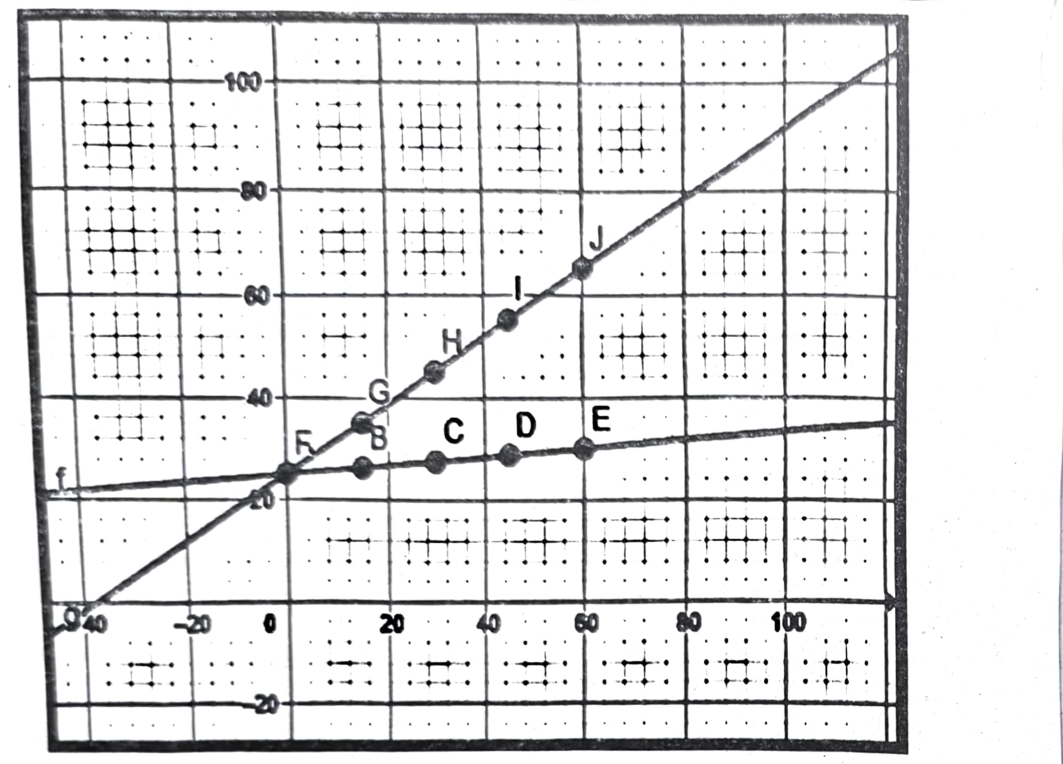
b. Ans: Based on the data in the table, metal would heat up faster than water. This is because metals have a lower specific heat capacity than water, meaning they require less energy to raise their temperature by one degree.
c. Ans: Water will cool more slowly than iron. This is because water has a higher specific heat capacity, meaning it takes more energy to raise or lower its temperature by a certain amount. Iron, on the other hand, has a lower specific heat capacity, so it heats up and cools down faster.
d. Ans: The iron pot will heat up faster than the water. This is because iron has a lower specific heat capacity compared to water, meaning it takes less energy to raise its temperature by a certain amount.
Short Questions:
We wear dark clothes in winter and light-colored clothes in summer primarily because of their different abilities to absorb and reflect heat. Dark colors absorb more sunlight, which helps to warm the body in cold weather, while light colors reflect sunlight, helping to keep us cool in hot weather.
Elaboration:
Winter:
In winter, our bodies tend to lose heat more easily due to the colder temperatures. Dark colors, such as black or navy blue, are better at absorbing sunlight and converting it into heat. This absorption of solar energy helps to warm the body, making us feel more comfortable in the cold.
Summer:
In summer, we want to avoid absorbing too much heat from the sun. Light-colored clothing, like white, is more reflective. It bounces a significant amount of the sun's rays away, reducing the amount of heat that is absorbed by the body. This reflection helps to keep us cooler in the warmer weather.
In a house where geysers or water boilers are installed on the ground floor, warm water can reach the top floor without the use of a pump due to the principles of water pressure and gravity. When the geyser heats the water, the temperature causes the water to expand and become less dense. This difference in density makes the hot water naturally rise through the pipes to the upper floors, a process aided by the initial pressure in the water supply system, which pushes the cold water into the geyser. Additionally, the gravitational pull of the earth works in tandem with the pressure in the pipes to facilitate the upward movement of the heated water.
OR (Second Answer)
The reason you get warm water on the top floor without a pump is due to convection.
(i) Heating:
The geyser or water boiler heats the water on the ground floor.
Density Change:
When water is heated, it becomes less dense.
Rising:
The less dense, warm water rises due to buoyancy. This is similar to how a hot air balloon rises.
Displacement:
As the warm water rises through the pipes, it displaces the cooler, denser water that was already in the pipes on the upper floors.
Gravity:
Gravity helps to pull the denser cold water down, creating a continuous cycle known as a convection current.
Radiant heat transfer follows the Inverse Square Law, which states that the intensity of radiation is inversely proportional to the square of the distance from the source.
Radiant Heat:
Wood fires primarily transfer heat through radiation, where heat energy is emitted as electromagnetic waves and travels through the air.
Convection:
Convection, where warm air rises, also plays a role, but the radiant heat from the fire will be more intense closer to the source.
Distance Matters:
The closer you are to the fire, the more direct radiant heat you’ll receive. Standing 1 meter from the front of the fire will expose you to a greater amount of heat than being 1 meter above, even though the heat is rising.
Crowded city areas feel hotter than the outskirts on a hot summer day due to a phenomenon called the urban heat island effect. There are several reasons for this:
Surface Materials:
Cities have a higher concentration of materials like concrete, asphalt, and brick. These materials have a high thermal capacity, meaning they absorb and store heat from the sun during the day. They then release this heat slowly, keeping the city warmer, especially at night. In contrast, outskirts often have more vegetation and open spaces, which absorb less heat and provide cooling through evaporation.
Reduced Evaporation:
Cities have less vegetation and fewer bodies of water, so there is less cooling through evaporation. Water evaporates from plants and soil, which absorbs heat and cools the surrounding air.
Air Pollution:
Cities often have higher levels of air pollution. Pollutants can trap heat and contribute to the urban heat island effect.
Geometry:
The tall buildings in cities can trap sunlight and reduce wind flow. This can lead to higher temperatures in street canyons.
Waste Heat:
Cities generate a significant amount of waste heat from vehicles, air conditioners, and industrial processes. This waste heat contributes to the overall warming of the urban environment.
The metallic handle feels colder than the wooden part of the door because of thermal conductivity.
Thermal Conductivity:
Different materials conduct heat at different rates. Metals are generally excellent conductors of heat, while wood is a relatively poor conductor (it’s a good insulator). Metal has a high thermal conductivity, meaning it readily conducts heat. This allows heat to flow through the metal quickly.
Heat Transfer:
When you touch the metal handle, heat from your hand rapidly flows into the metal because of its high thermal conductivity. This rapid heat transfer causes your hand to lose heat quickly, making the metal feel cold.
Wood’s Insulation:
When you touch the wood, the heat transfer from your hand is much slower because wood is a poor conductor. Your hand doesn’t lose heat as quickly, so the wood doesn’t feel as cold.
Trees are crucial in mitigating climate change by acting as carbon sinks, absorbing atmospheric carbon dioxide during photosynthesis. Depletion of forests leads to increased greenhouse gas emissions, reduced carbon absorption, and other detrimental effects on the environment and ecosystems.
How trees help reduce climate change:
Carbon Sequestration:
Trees absorb carbon dioxide from the atmosphere through photosynthesis, storing it in their wood and roots. This process helps reduce the amount of greenhouse gases in the atmosphere, which contribute to global warming.
Water Cycle Regulation:
Trees play a role in the water cycle by intercepting rainfall, reducing runoff, and influencing evaporation rates. This helps regulate local climates and prevent flooding.
Soil Conservation:
Tree roots help bind soil, preventing erosion and nutrient loss. Healthy forests also contribute to soil fertility, which is important for agricultural productivity.
Biodiversity Protection:
Forests are home to a wide variety of plant and animal species, providing crucial habitats and contributing to the health and resilience of ecosystems.
What happens if forests are depleted:
Increased Greenhouse Gas Emissions:
When forests are cleared, the stored carbon is released into the atmosphere, further contributing to climate change.
Reduced Carbon Absorption:
With fewer trees, the capacity of forests to absorb carbon dioxide diminishes, impacting the ability to mitigate climate change.
Ecosystem Disruption:
Deforestation can lead to habitat loss, biodiversity decline, and changes in ecosystem functions.
Soil Erosion and Desertification:
Without trees to stabilize the soil, erosion can occur, leading to soil degradation and potentially desertification.
Water Quality Degradation:
Deforestation can increase runoff and sedimentation, impacting water quality and aquatic ecosystems.
In summary, trees play a vital role in mitigating climate change and maintaining ecosystem health. Deforestation has significant negative consequences for the environment and human well-being.
OR (Second Answer)
Trees play a crucial role in mitigating the effects of climate change by absorbing carbon dioxide CO2 from the atmosphere through photosynthesis, which helps reduce the concentration of greenhouse gases. They also release oxygen, contribute to cooler temperatures through transpiration, and improve air quality by filtering pollutants. Additionally, forests act as carbon sinks, storing carbon in their biomass and soil. However, if forests are depleted, these benefits are lost. Deforestation leads to an increase in CO2 levels, further exacerbating global warming. Without forests to absorb carbon, the atmosphere becomes more carbon-heavy, accelerating climate change. Moreover, the destruction of forests disrupts ecosystems, reduces biodiversity, and impacts the livelihoods of communities dependent on forests for resources, ultimately worsening environmental and social challenges.
Gravity contributes to the Earth’s core temperature in a few key ways:
Primordial Heat (Accretion):
In the early stages of Earth’s formation, gravity pulled together dust, rock, and other materials. As these materials collided and coalesced, the gravitational potential energy was converted into kinetic energy, and then into heat upon impact. This process, called accretion, generated a tremendous amount of heat, which is still dissipating from the Earth’s interior today.
Differentiation:
As the Earth formed and heated up, denser materials like iron and nickel sank towards the center, while lighter materials floated towards the surface. This process, called differentiation, released gravitational potential energy, which was converted into heat.
Compression:
The immense weight of the overlying layers of rock and other materials exerts tremendous pressure on the Earth’s core. This pressure compresses the core materials, which increases their internal energy and temperature.
Radioactive Decay:
While not directly related to gravity, radioactive decay of elements like uranium, thorium, and potassium in the Earth’s mantle and core also contributes to the Earth’s internal heat. However, gravity played a role in bringing these elements together during the Earth’s formation.
OR (Second Answer)
Gravity plays a significant role in maintaining the Earth’s core temperature through a process known as gravitational contraction. When the Earth formed, it was made up of hot, molten material. Over time, gravity caused the heavier materials to sink towards the center, while lighter materials floated towards the surface. As these materials moved inward, gravitational forces compressed them, generating heat. This heat, combined with the residual heat from the planet’s formation, contributes to the high temperatures found in the Earth’s core. Additionally, gravity helps to maintain the Earth’s internal pressure, which is essential for the ongoing processes of radioactive decay in the mantle and core. This decay also generates heat, which further contributes to the Earth’s core temperature. In short, gravity’s effects on compression and pressure, combined with radioactive decay, are key factors in sustaining the heat within the Earth’s core.
Certain gases trap more heat than others in the atmosphere due to their molecular structure and their ability to absorb and emit infrared radiation.
Molecular Structure:
Greenhouse gases have a molecular structure that allows them to absorb and emit infrared radiation. These molecules typically have three or more atoms (e.g., CO2, H2O, CH4) or have a bent or asymmetrical structure (e.g., O3). This structure allows the molecules to vibrate and rotate in response to incoming infrared radiation.
Global Warming Potential (GWP):
The global warming potential (GWP) of a greenhouse gas is a measure of how much heat a gas traps in the atmosphere over a specific time period,
relative to CO2. Gases with high GWPs such as chlorofluorocarbons (CFCs) and nitrous oxide (N2O), are very effective at trapping heat and have a disproportionate impact on climate change.
In summary, certain gases trap more heat than others in the atmosphere due to their molecular structure, their ability to absorb and emit infrared radiation at specific wavelengths, their abundance in the atmosphere, and their global warming potential. Gases with a higher GWP absorb more energy, per ton emitted, than gases with a lower GWP, and thus contribute more to warming Earth.
OR (Second Answer)
Certain gases, like carbon dioxide (CO2), methane (CH4), and water vapor (H2O), trap more heat because they are greenhouse gases. These gases have molecular structures that allow them to absorb and re-radiate infrared radiation (heat) back toward the Earth’s surface, preventing it from escaping into space. This process, known as the greenhouse effect, is stronger in gases that can absorb heat at specific wavelengths of infrared radiation, making them more efficient at trapping heat.
Geothermal energy extraction can have several potential environmental impacts, including air and water pollution, surface instability, and geological hazards. Air pollution arises from the release of non-condensable gases like carbon dioxide and methane. Water pollution can occur due to the discharge of geothermal fluids and the use of water for cooling. Surface instability, like land subsidence, can occur as geothermal fluids are extracted from reservoirs. Additionally, there’s a risk of triggering earthquakes, especially in enhanced geothermal systems.
The specific heat capacity of cookware materials affects their heating and cooling behavior, impacting how quickly food cooks and how evenly heat is distributed. Materials with low specific heat capacity are preferred for rapid heating tasks, while materials with high specific heat capacity are better suited for slow cooking or maintaining consistent temperatures. Materials with low specific heat capacity heat up quickly and cool down quickly, making them suitable for tasks like boiling water or quickly searing food. Materials with high specific heat capacity heat up more slowly but retain heat longer, which is beneficial for slow cooking or maintaining consistent temperatures.
OR (Second Answer)
The specific heat capacity of a material affects how quickly it heats up and cools down. Materials with a high specific heat capacity (like water or cast iron) require more energy to change their temperature, meaning they heat up more slowly but retain heat for longer. This makes them ideal for cookware that needs to maintain a steady, even heat, like in slow cooking or simmering. On the other hand, materials with low specific heat capacity (like aluminum) heat up quickly and cool down faster, making them suitable for tasks that require fast temperature adjustments, such as stir-frying or searing. The choice of material depends on the type of cooking and heat control needed.
Examples:
- For example, aluminum cookware heats up faster than cast iron cookware because aluminum has a lower specific heat capacity.
- For example, copper cookware is known for its excellent heat distribution due to its high thermal conductivity and moderate specific heat capacity.
- For example, cast iron cookware is known for its excellent heat retention due to its high specific heat capacity.
- For example, stainless steel cookware with an aluminum core responds quickly to changes in burner settings, allowing for more precise cooking.
Materials with low specific heat capacities heat up quickly, while materials with high specific heat capacities retain heat for longer.
Calculate the energy released by steam when it condenses to water at 100°C.
The latent heat of vaporization of water is 226 kJ/kg.
Energy released during condensation:
Qcondensation = m · Lv = 1 · 2260 = 2260 kJ
Calculate the energy released by water when it cools from 100°C to 20°C.
The specific heat capacity of water is 4.186 kJ/kg.
Energy released during cooling:
Qcooling = m · c · ΔT = 1 · 4.186 · (100 − 20) = 334.88 kJ
Calculate the total energy released by steam.
Total energy released by steam:
Qtotal steam = Qcondensation + Qcooling = 2260 + 334.88 = 2594.88 kJ
Calculate the energy released by hot water when it cools from 100°C to 20°C.
Energy released during cooling:
Qcooling = m · c · ΔT = 1 × 4.186 × (100 − 20) = 334.88 kJ
Compare the energy released by steam and hot water.
Steam releases 2594.88 kJ, while hot water releases 334.88 kJ.
Therefore, Steam releases more energy than hot water due to the latent heat of vaporization.
OR (Second Answer)
1 kg of steam releases more energy than 1 kg of hot water because steam releases the latent heat of vaporization in addition to the heat released during cooling. 1 kg of steam releases more energy than 1 kg of hot water when cooling from 100°C to 20°C because of the latent heat of vaporization. Steam must first condense into water before cooling, releasing a large amount of energy in the process. Hot water, on the other hand, only loses heat as it cools, requiring less energy. Thus, the phase change from steam to water contributes additional energy release.
Long Questions:
Concept of Specific Heat Capacity:
Specific heat capacity is the amount of heat energy required to raise the temperature of one unit mass of a substance by one degree Celsius (or Kelvin). It is represented by the symbol ‘c’ and is measured in Joules per kilogram per degree Celsius (J/kg°C).
Mathematically, it is given by the formula:
$$Q = mc\Delta T$$
Where:
- Q = Heat energy absorbed or released (Joules)
- m = Mass of the substance (kg)
- c = Specific heat capacity (J/kg°C)
- ΔT = Change in temperature (°C or K)
Water has a high specific heat capacity (4184 J/kg°C), meaning it takes a considerable amount of heat energy to raise its temperature compared to other substances. This property of water is crucial for various applications, including temperature regulation on Earth, cooling systems, and even biological processes.
Applications of Water’s High Specific Heat Capacity:
Defining Specific Heat Capacity:
Essentially, specific heat capacity measures how much energy a substance needs to absorb to increase its temperature by a certain amount. A higher specific heat capacity indicates that a substance resists temperature changes more effectively.
Water’s High Specific Heat:
Water’s high specific heat is due to its strong hydrogen bonds between molecules. These bonds require a significant amount of energy to break, which means water needs a lot of heat to change its temperature.
Applications of Water’s High Specific Heat:
Temperature Regulation:
Water’s high specific heat plays a vital role in regulating Earth’s temperature. Oceans and lakes moderate coastal climates by absorbing large amounts of heat without significant temperature increases.
Cooling Systems:
Water is used as a coolant in various applications, including car radiators and industrial processes. Its high heat capacity allows it to absorb a large amount of heat without a drastic temperature rise.
Biological Processes:
Water’s high specific heat helps regulate the body temperature of animals. It acts as a coolant, distributing heat throughout the body and preventing drastic temperature fluctuations.
Everyday Life:
Hot water bottles, which use water’s high specific heat to retain heat, are another example of its practical application.
Contrast with Other Substances:
Substances with lower specific heat capacities, like metals, heat up and cool down more quickly than water. This is why a metal chair on a sunny day will feel hotter than an equal mass of water.
Conduction:
Conduction is the transfer of heat through direct contact, where energy is passed from one molecule to another through vibrations and collisions. The kinetic theory of solids explains conduction as the movement and collision of particles within a solid, transferring thermal energy. Metals are generally better conductors due to their high number of free electrons, which contribute to the efficient transfer of heat.
Conduction and the Kinetic Theory of Solids:
Kinetic Theory:
The kinetic theory of solids explains that atoms and molecules within a solid are not stationary but vibrate around their fixed positions.
Vibrations and Collisions:
When one end of a solid is heated, the particles at that end gain kinetic energy and vibrate more vigorously.
Energy Transfer:
These vibrations are then passed on to neighboring particles through collisions, transferring thermal energy throughout the material.
Solids as Conductors:
Solids are good conductors because the particles are closely packed, allowing for frequent and efficient energy transfer through vibrations and collisions.
Why Metals are Better Conductors:
Free Electrons:
Metals have a “sea” of free electrons that are not bound to individual atoms.
Enhanced Energy Transfer:
These free electrons can move through the metal and collide with other particles, further contributing to the transfer of thermal energy.
Higher Conductivity:
The presence of these free electrons makes metals much better conductors of heat than other solids.
Heat Transfer by Convection:
Convection is the transfer of heat through the movement of fluids, primarily liquids and gases. When a fluid is heated, it expands and becomes less dense, causing it to rise, while cooler, denser fluid sinks to take its place, creating a circulating current. The less dense, warmer fluid rises due to buoyancy, while the denser, cooler fluid sinks to take its place. This creates a continuous circulation pattern, with warm fluid rising and cool fluid sinking, transferring heat throughout the fluid.
Here are three practical examples of convection in daily life:
Boiling water:
When you heat water in a pot, the water at the bottom near the heat source becomes hotter and less dense, causing it to rise. Cooler water sinks to take its place, and this continuous cycle of rising hot water and sinking cooler water is the convection current that distributes heat throughout the pot.
Air conditioning:
Air conditioners work by circulating cold air. The air conditioner expels cold air into the room, which is denser and sinks to the floor. As this cold air sinks, it pushes warm, less dense air upwards, creating a convection current that cools the entire room.
Oven heating:
In convection ovens, a fan circulates hot air throughout the oven. This continuous movement of hot air ensures that the food inside is heated evenly and cooks more consistently.
Radiators and Heaters:
Radiators and heaters warm a room through convection. The heater warms the air around it, which then rises. Cooler air from the rest of the room moves in to replace the warm air, creating a convection current that circulates warm air throughout the room.
Weather Patterns:
Convection plays a significant role in weather patterns. Warm air at the Earth’s surface rises, creating areas of low pressure. As the warm air rises, it cools and can form clouds and precipitation. Cooler air then sinks, creating areas of high pressure. These convection currents drive wind and other weather phenomena.
These examples illustrate how convection plays a vital role in many everyday processes, from cooking to climate control.
Heat Transfer by Radiation:
Radiation is the fastest method of heat transfer because it involves the propagation of electromagnetic waves, which travel at the speed of light. In contrast, conduction and convection rely on the movement of particles or fluids, which are much slower processes. Radiation is the transfer of heat energy through electromagnetic waves. Unlike conduction and convection, radiation does not require a medium to transfer heat; it can occur through a vacuum. All objects with a temperature above absolute zero emit thermal radiation. The rate of heat transfer by radiation is influenced by several factors including temperature, surface properties, and distance.
Explanation:
Mechanism:
Radiation involves the emission and absorption of electromagnetic waves, specifically infrared radiation, which carry energy from one object to another.
Speed:
These electromagnetic waves travel at the speed of light (3 × 10⁸ ms−1), making radiation the fastest mode of heat transfer compared to conduction and convection.
Factors Affecting Rate of heat transfer by radiation:
Temperature:
The hotter an object, the more electromagnetic radiation it emits, and the faster the heat transfer rate. Stefan-Boltzmann’s law states that the radiant energy emitted is proportional to the fourth power of the object's absolute temperature.
Surface Properties:
Emissivity, a measure of an object’s ability to emit radiation, also affects the rate of heat transfer. Materials with high emissivity (e.g., dark, rough
surfaces) emit and absorb more radiation than those with low emissivity (e.g., shiny, smooth surfaces).Distance:
The intensity of radiation decreases with the square of the distance from the source (inverse square law), meaning the farther apart the objects are, the slower the heat transfer rate.
Role of Greenhouse Gases in Global Warming:
Greenhouse gases trap heat in the atmosphere, leading to global warming, which in turn exacerbates extreme weather events like hurricanes, heat waves, floods, and droughts. Warmer temperatures increase atmospheric moisture, making storms wetter and stronger, and also cause more evaporation, intensifying both droughts and heat waves.
How Greenhouse Gases Contribute to Global Warming:
Trapping Heat:
Greenhouse gases like carbon dioxide, methane, and water vapor absorb heat radiated from the Earth’s surface and prevent it from escaping into space, causing a warming effect, similar to how the glass in a greenhouse traps heat.
Increased Atmospheric Moisture:
As the atmosphere warms, it can hold more moisture, which leads to more intense rainfall and flooding, particularly during extreme weather events.
Warmer Oceans:
Warmer oceans provide more fuel for hurricanes and tropical cyclones, making them stronger and more destructive.
How Global Warming Impacts Extreme Weather:
Hurricanes:
Warmer ocean temperatures provide more energy for hurricanes, leading to stronger winds, higher storm surges, and increased rainfall, making them more destructive.
Heat Waves:
Warmer air temperatures lead to more frequent and intense heat waves, with increased humidity making them even more dangerous.
Flooding:
Increased rainfall from storms and melting glaciers and ice sheets contribute to more frequent and severe flooding events.
Droughts:
Warmer temperatures increase evaporation, leading to drier conditions and more frequent and intense droughts.
Earth’s core remains extremely hot, reaching temperatures similar to the sun’s surface, due to a combination of heat sources: heat from the planet’s formation, frictional heating during core formation, and radioactive decay of elements within the core and mantle.
Here’s a more detailed explanation:
Residual Heat from Formation:
- When Earth formed, billions of years ago, the collision and accretion of planetesimals generated immense heat. This initial heat, along with gravitational compression as the planet’s mass increased, led to the melting of iron and nickel, forming the core.
- This process released a significant amount of potential energy as heat.
Frictional Heating:
- As the denser iron and nickel sank to the center, friction with other materials generated additional heat.
- This process of differentiation and the sinking of denser materials contributed to the core’s heat.
Radioactive Decay:
- Radioactive elements, such as uranium and thorium, decay naturally, releasing energy in the form of heat.
- These radioactive elements are present in the core and mantle, and their decay continues to contribute to the Earth’s internal heat.
- This heat generation from radioactive decay is a significant factor in maintaining the core’s high temperature.
Slow Cooling Rate:
- The core’s high temperature is also maintained because the Earth’s internal structure and its large size allow it to retain heat for a long time.
- The core’s high pressure also helps to solidify the inner core despite the high temperatures.
- The Earth’s large size and low surface area-to-volume ratio mean that it cools very slowly.
- In essence, the Earth’s core is like a slow-cooking oven, and its high temperature has been maintained for billions of years due to these factors.
Convection in the Mantle:
- Convection currents in the Earth’s mantle help to redistribute heat, but they also insulate the core to some extent. The slow, churning motion of the mantle helps to keep heat trapped within the Earth’s interior.
Formation of Tectonic Plates:
Tectonic plates are formed from the Earth’s lithosphere, which includes the crust and the uppermost part of the mantle. The lithosphere is broken into about 15 major plates and several smaller ones. These plates are not fixed but move and interact with each other. The formation of these plates is closely linked to the Earth’s internal heat and convection processes.
Explanation:
Cooling of the Earth’s Surface:
The Earth’s surface cools over millions of years, causing the uppermost layer to become rigid and brittle. This rigid layer forms the lithosphere.
Differentiation:
During the early formation of the Earth, heavier elements (like iron and nickel) sank to the core, while lighter materials rose to the surface. This differentiation process led to the formation of distinct layers: the core, mantle, and crust.
Solidification:
As the Earth cooled, the mantle began to solidify. The uppermost part of the mantle, combined with the crust, forms the lithosphere.
Factors Causing Tectonic Plate Movement:
The primary driving force behind tectonic plate movement is thermal convection in the Earth’s mantle. Several factors contribute to this movement:
Mantle Convection:
The mantle is heated from below by the Earth’s core. This heat causes the mantle material to become less dense and rise. As it rises, it cools and eventually sinks back down, creating a circular convection current. These convection currents exert forces on the overlying lithospheric plates, causing them to move.
Ridge Push:
At mid-ocean ridges, where new oceanic crust is formed, the elevated ridge pushes the lithospheric plates away from the ridge. This “ridge push” is caused by the gravitational force acting on the elevated ridge.
Slab Pull:
At subduction zones, where one plate is forced beneath another, the denser plate sinks into the mantle. This “slab pull” is caused by the gravitational force acting on the dense, sinking plate. Slab pull is considered one of the most significant forces driving plate tectonics.
Effects of Plate Movements:
The movement of tectonic plates has numerous effects on the Earth’s surface:
Earthquakes:
Earthquakes occur when the stress along plate boundaries exceeds the strength of the rocks, causing them to suddenly slip.
Volcanoes:
Volcanoes often form at plate boundaries, particularly at subduction zones and mid-ocean ridges.
Mountain Building:
When two continental plates collide, the immense pressure can cause the crust to buckle and fold, forming mountain ranges.
Ocean Trenches:
At subduction zones, the descending plate creates deep ocean trenches.
Rift Valleys:
Rift valleys form where continental plates are diverging.
Formation of New Crust:
At mid-ocean ridges, new oceanic crust is formed as magma rises from the mantle and solidifies.
Continental Drift:
Over millions of years, the movement of tectonic plates causes continents to drift apart or collide.
Numericals:
Ans: To convert the specific heat of water from J kg⁻¹ K⁻¹ to J g⁻¹ °C⁻¹, we need to consider the relationship between kilograms and grams, and the relationship between Kelvin and Celsius.
Kilograms to Grams:
1 kg = 1000 g
Therefore, 1 kg⁻¹ = $\frac{1}{1000}\,\mathrm{g}^{-1}$
Kelvin to Celsius:
A change of 1 Kelvin is equal to a change of 1 degree Celsius.
Therefore, $1\,\mathrm{K}^{-1}=1\,{}^\circ\mathrm{C}^{-1}$
Now, we can convert the specific heat of water:
$$4180\,\frac{\mathrm{J}}{\mathrm{kg}\cdot\mathrm{K}}=4180\times\frac{\mathrm{J}}{1000\,\mathrm{g}\cdot{}^\circ\mathrm{C}}$$
$$=\frac{4180}{1000}\,\frac{\mathrm{J}}{\mathrm{g}\cdot{}^\circ\mathrm{C}}=4.18\,\frac{\mathrm{J}}{\mathrm{g}\cdot{}^\circ\mathrm{C}}=4.18\,\mathrm{J\,g}^{-1}\,{}^\circ\mathrm{C}^{-1}$$
So, the specific heat of water in the desired units is 4.18 J g⁻¹ °C⁻¹.